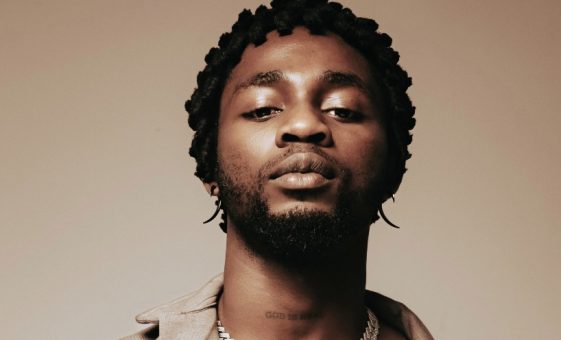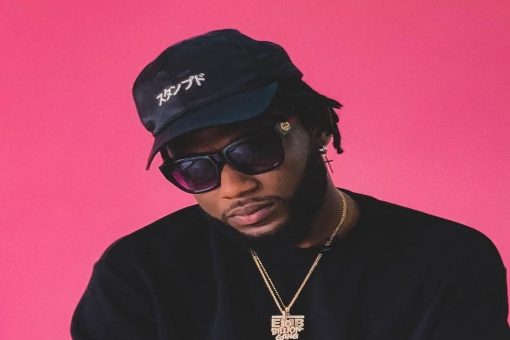
In an industry where visibility often feels like validation, the line between recognition and neglect can be painfully thin, and for Dremo, that line seems to have become all too familiar. Known for his sharp lyricism, effortless flow, and consistency within Nigeria’s ever-evolving hip-hop scene, the rapper recently opened up about a feeling that many artists silently battle being underrated despite years of dedication and output.
There is something strikingly honest about admitting to feeling overlooked, especially in a culture that constantly celebrates success in loud, measurable ways. Streaming numbers, award plaques, viral moments these have become the currency of relevance. Yet, Dremo’s reflection cuts through that noise, pointing to a deeper frustration that goes beyond metrics. It speaks to the desire for acknowledgment, for one’s craft to be seen and respected not just by fans, but by the industry at large.
Since emerging under the influential Davido Music Worldwide label, Dremo has carved out a space for himself with a distinct sound that blends street sensibility with technical finesse. Tracks that showcase his versatility have come and gone, collaborations have added to his catalog, and his presence has remained steady even when the spotlight shifted elsewhere. Still, consistency does not always translate into acclaim, and that disconnect can be difficult to ignore.
What makes his statement resonate is how relatable it is not just for artists, but for anyone who has ever felt like their efforts are not fully recognized. There is a quiet weight in doing the work, showing up, improving, and still feeling like you are standing in someone else’s shadow. In Dremo’s case, being part of a powerhouse label comes with both opportunity and challenge. While it provides a platform, it can also create comparisons that make individual achievements harder to distinguish.
At the same time, the idea of being underrated carries a certain power. It suggests untapped potential, a sense that there is more to give and more to prove. Some of the most compelling journeys in music have come from artists who turned that feeling into fuel, using it to push boundaries and redefine how they are perceived. For Dremo, this moment of honesty could very well mark the beginning of a new chapter one driven not by external validation, but by a renewed hunger to command attention on his own terms.
There is also a broader conversation to be had about how talent is measured and celebrated in the modern music landscape. In an era dominated by trends and algorithms, artistry can sometimes take a back seat to virality. This creates an environment where skilled performers may not always receive the recognition they deserve, simply because their work does not fit neatly into what is currently popular. Dremo’s voice, in this context, becomes part of a larger narrative about the need to appreciate depth and longevity, not just momentary buzz.
Ultimately, his statement is less a complaint and more a declaration. It is a reminder that behind every confident persona is a human being who wants their work to matter. And perhaps, in acknowledging that feeling, Dremo is doing something even more impactful inviting listeners to look again, to listen more closely, and to reconsider where true value in music really lies.
About The Author