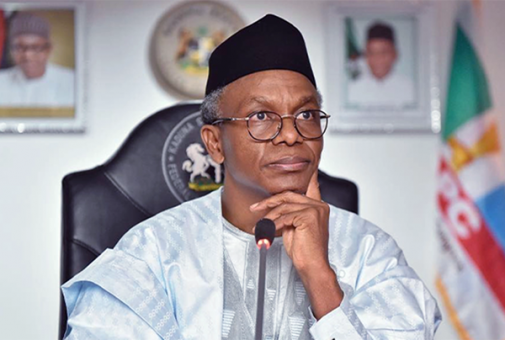
Former Kaduna State governor Nasir El-Rufai has taken legal action against the Independent Corrupt Practices and Other Related Offences Commission (ICPC) and other security agencies over what he describes as an unlawful search of his Abuja residence, escalating tensions between the outspoken politician and federal authorities.
According to court filings, El-Rufai is challenging what he claims was a violation of his fundamental human rights after operatives allegedly stormed his Abuja home without proper legal backing. The former governor insists that the search was carried out without a valid warrant and amounted to harassment, intimidation, and an abuse of power. He is reportedly asking the court to declare the operation illegal and to award damages for the alleged infringement on his rights.
Sources close to the matter say the incident occurred amid heightened scrutiny of past state government transactions, though the ICPC has not publicly detailed the specific allegations tied to the reported search. The commission, established to investigate and prosecute corruption-related offences, has in recent years intensified investigations involving former public officials, particularly those who recently left office.
El-Rufai, who governed Kaduna State for eight years and remains a prominent voice in national politics, has maintained that he has nothing to hide. He argues that due process must be followed regardless of political differences, emphasizing that no agency has the right to bypass constitutional safeguards. In his suit, he is said to be seeking a judicial pronouncement affirming that even anti-corruption efforts must strictly adhere to the rule of law.
The development has sparked political debate, with supporters describing the lawsuit as a bold move to defend civil liberties, while critics argue that public officials must be fully accountable and transparent when allegations arise. Legal analysts note that the case could test the boundaries between investigative powers and citizens’ constitutional protections, particularly regarding searches and seizures.
As the matter heads to court, attention will likely focus on whether due process was followed and what precedent the ruling might set for future investigations involving high-profile figures. For now, the lawsuit adds another chapter to the evolving conversation about accountability, power, and the balance between fighting corruption and protecting individual rights in Nigeria’s democracy.