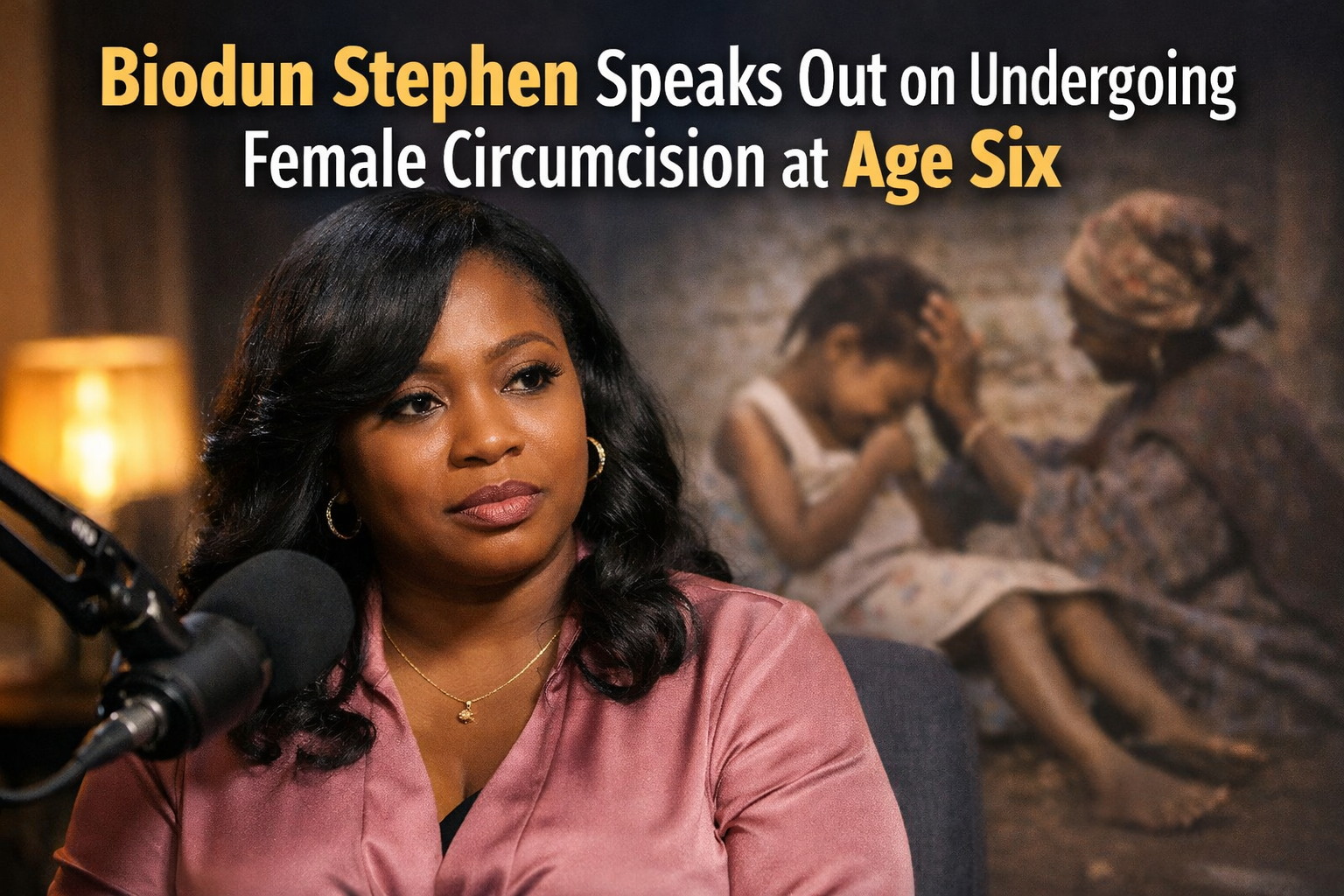
Award‑winning Nigerian filmmaker Biodun Stephen has opened up about a deeply personal and painful experience from her childhood , undergoing female circumcision at the age of six. The revelation came during a recent interview on the Diary of a Naija Girl podcast, where she spoke candidly about how the procedure was carried out and the lasting memories it left behind.
Stephen, known for directing and producing popular films such as Breaded Life, Sistà, Muri & Ko, and Introducing the Kujus, shared that the tradition was carried out by her grandmother, reflecting a deeply rooted cultural practice within her family. She recalled being taken to a woman’s house under the pretense of a normal outing, told she could play and eat, and then being asked to lie down for the procedure , which left her with vivid mental images of pain that he still remembers decades later.
“I remember, I was six when I went for circumcision. I remember it vividly , the pain, the mat, that afternoon… It was searing,” she said, describing the experience with emotional honesty. Stephen explained that she was unaware of what was happening and that, afterwards, her mother tried to comfort her without fully explaining the situation at the time.
The filmmaker linked her personal history to her creative work, noting that fragments of her own experiences have influenced the themes and stories she tells on screen. In fact, her early work, The Visit, briefly explored the subject of female circumcision and its effects ,reflecting her desire to address real and sometimes difficult issues through her art.
By sharing her story openly, Stephen has drawn renewed attention to the ongoing conversation in Nigeria and across Africa about the harmful practice of female genital mutilation (FGM). Although it remains a tradition in some communities, advocacy groups and international organizations continue to highlight its physical and psychological risks and call for education and action to protect children.
Stephen’s revelation not only sheds light on her personal journey but also fuels broader discussions around cultural practices, women’s rights, and the power of storytelling in confronting difficult realities.
About The Author